
By Tiffany Grant, PhD, CDE®
University of Cincinnati Libraries Research & Data Services
Love Data Week kicks off today, February 13 and runs through Friday, February 17, 2023.
Love Data Week is an international event celebrating data and raising global awareness about the importance of data science and management. Typically, this week is used to as an opportunity to convene a community of data scientists and discuss contemporary issues affecting data management, sharing, privacy, preservation, reuse, and delivery.
The theme this year is Data: Agent of Change. Love Data Week is about inspiring your community to use data to bring about changes that matter. Policy change, environmental change, social change…we can move mountains with the right data guiding our decisions. This year, we are focused on helping new and seasoned data users find data training and other resources that can help move the needle on the issues they care about.
Members of the University of Cincinnati Libraries Research & Data Services group will be posting blogs with content relevant to the theme of Data: Agent of Change. In an effort multitask while also celebrating Love Data Week, the Research & Data Services Unit is using the week to accomplish several goals. First, we will use the week to highlight the new NIH Data Management and Sharing Policy that went into effect on January 25th. We will release a document entitled “The New NIH Policy for Data Management and Sharing and What it Means for You at the University of Cincinnati” to the UC community. We intend for this comprehensive document to serve as a great resource for those seeking funding from the NIH. Second, we will highlight ICPSR and several datasets that relate to the week’s theme of Data as an Agent of Change. These datasets have been used to create change and to bring awareness to topics/individuals/groups who have been historically marginalized. You can find links to these datasets below. Third, we will discuss how GIS (Geographic Information Systems) can be used for social justice, and we will provide information on two websites with information concerning timely and relevant content relating to the Black Lives Matter and Police Shootings. Lastly, we will have an interactive event in the Health Sciences Library that will engage participants on Scholar and how it can be used to address the new NIH Policy (see Liblog Post). More information on this latter event can be found below.
Love Data Week LiBlog Post Schedule
February 13: NIH Policy Document
February 14: Franz Boas’s Immigrant Study and the Research Center for Minority Data (ICPSR datasets)
February 15: Esri Resources, Using GIS for Social Justice
February 16: ICPSR Transgender Survey
February 17: Data for Black Lives and Fatal Force Police Shootings Database
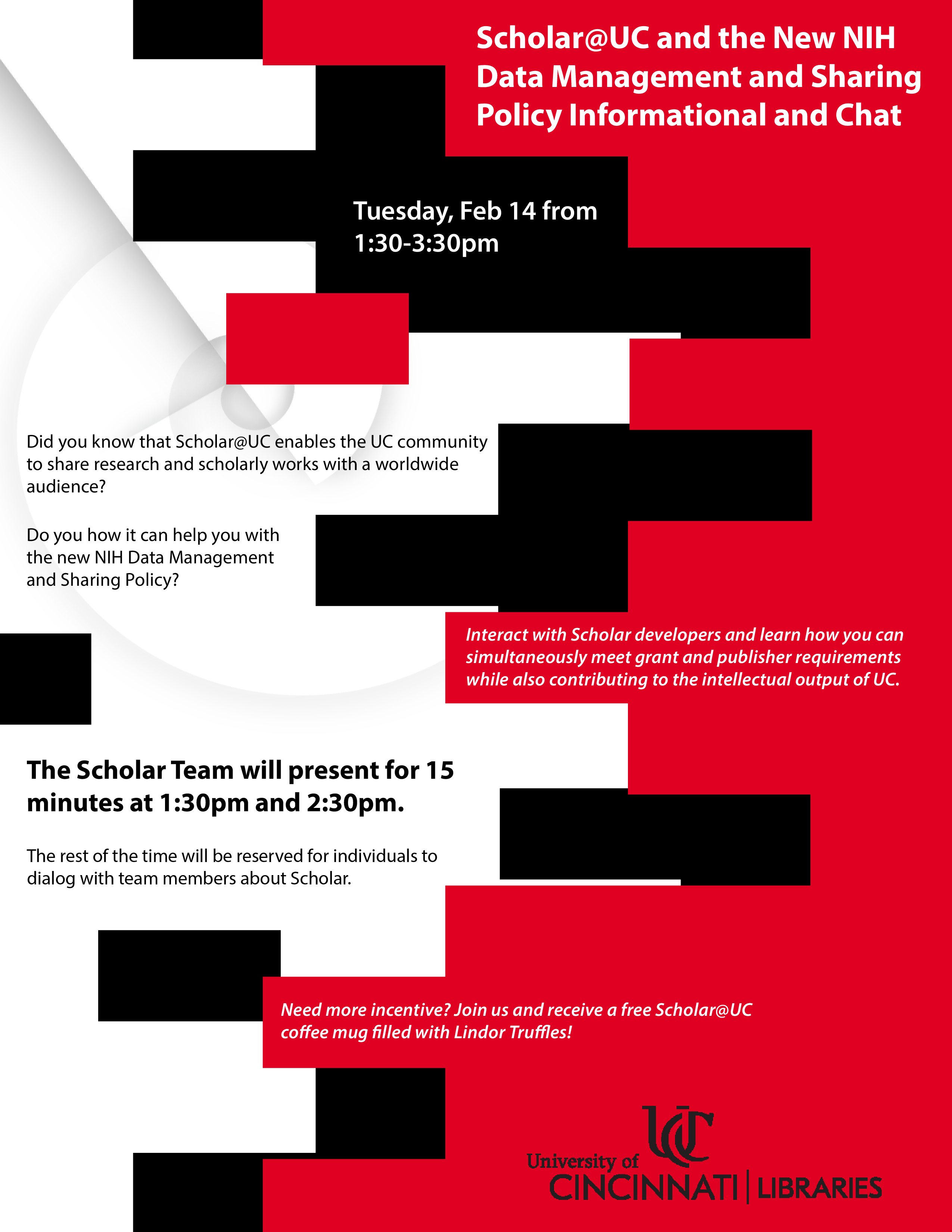
On February 14th, we will host Scholar@UC and the new NIH Data Management and Sharing Policy Informational and Chat. Faculty, staff, and student researchers are encouraged to interact with Scholar developers and learn how they can simultaneously meet grant and publisher requirements while also contributing to the intellectual output of UC. Participants will receive a free Scholar@UC coffee mug filled with Lindor Truffles (available while supplies last).
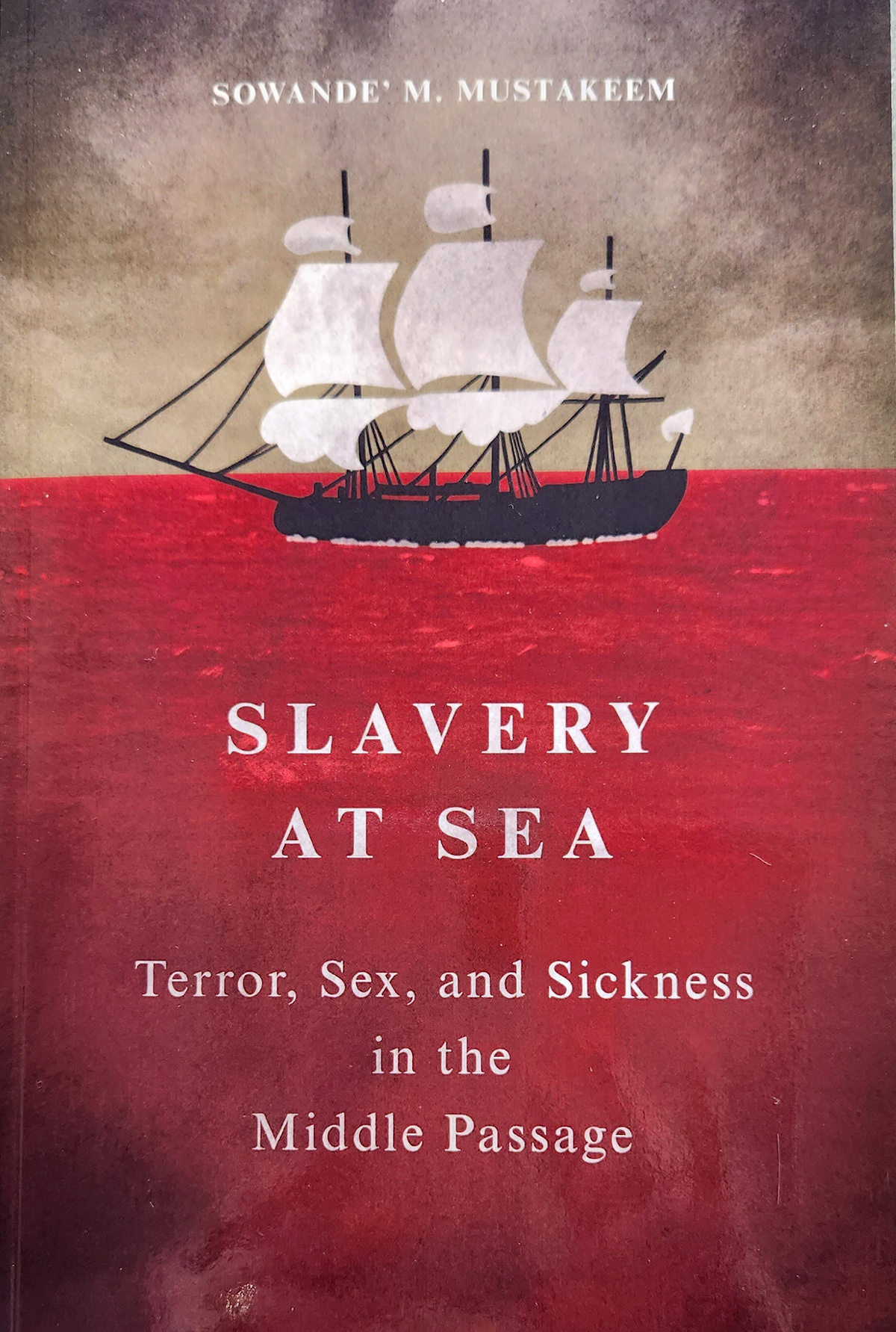 The University of Cincinnati Libraries Racial Equity Support & Programming to Educate the Community Team (RESPECT) and the Donald C. Harrison Health Sciences Library are hosting a book discussion and Lunch and Learn with Sowande’ M. Mustakeem, author of “Slavery at Sea: Terror, Sex, and Sickness in the Middle Passage” on Thursday, Feb. 23 from 12:30-2pm in the Health Sciences Library’s Stanley J. Lucas M.D. Boardroom (E005HA).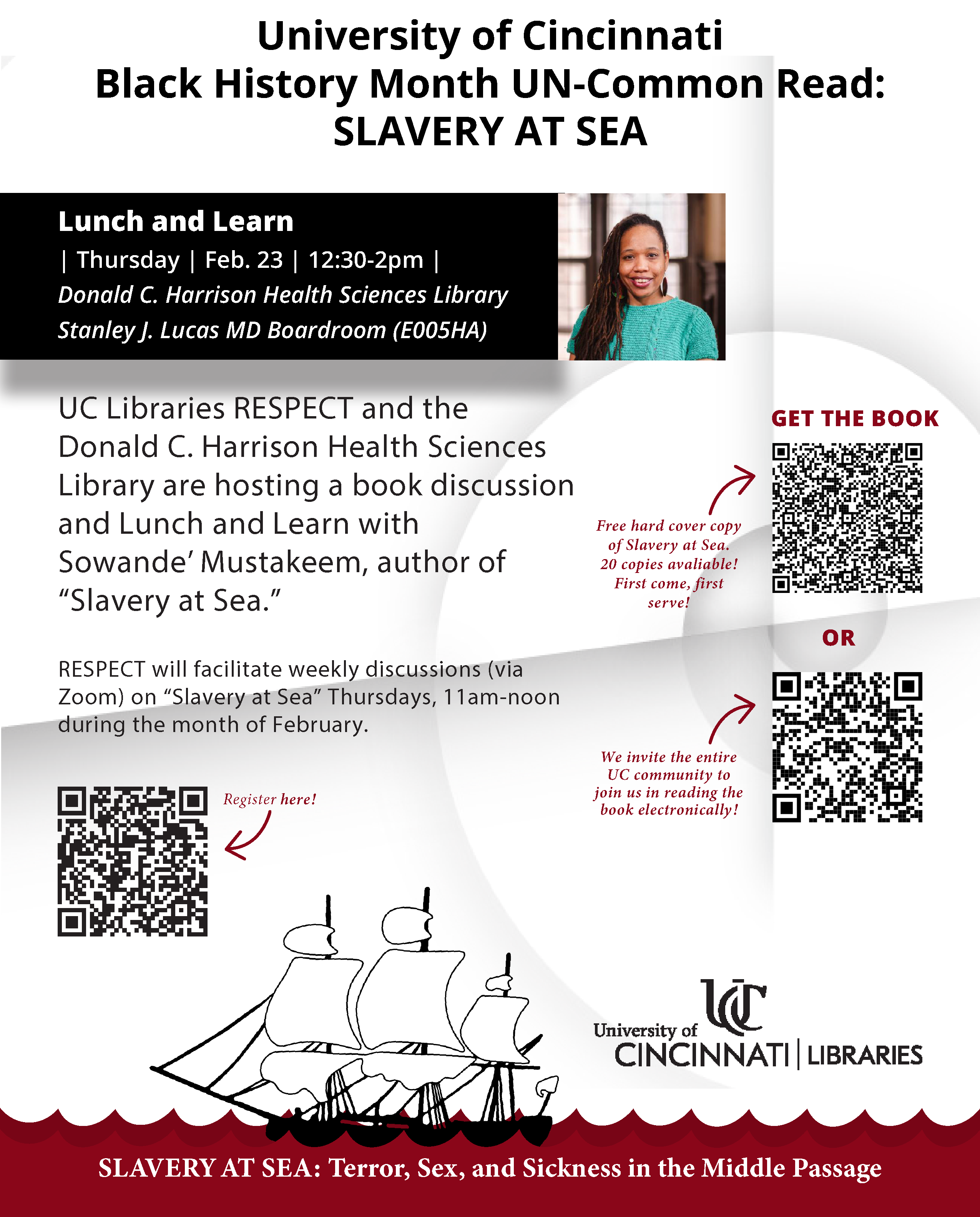
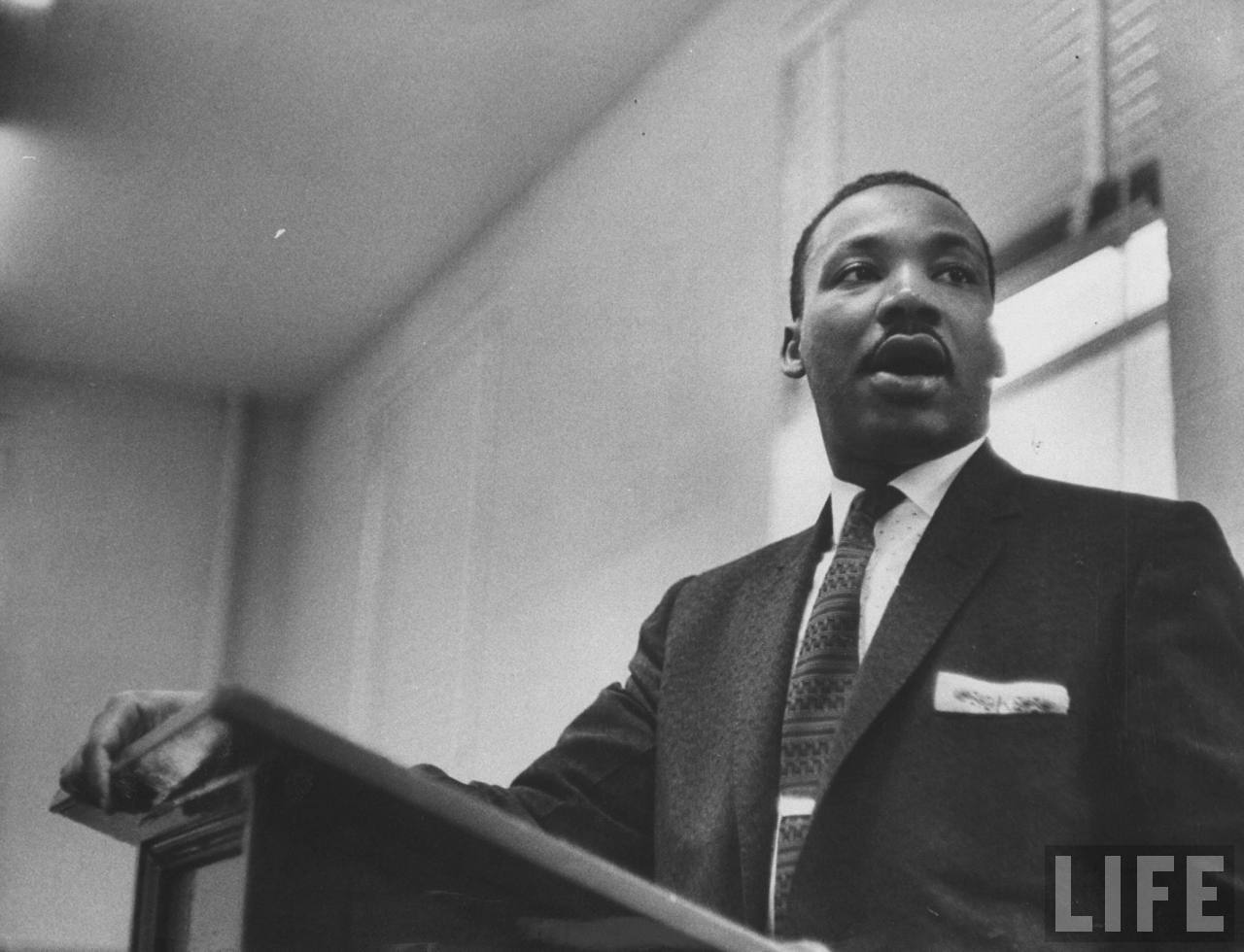
 The Henry R. Winkler Center for the History of the Health Professions announces its next Lunch and Learn scheduled for Thursday, Jan. 19 from 12-1 PM in the Stanley J. Lucas MD Boardroom (E005HA), Donald C. Harrison Health Sciences Library. The Lunch & Learn will also be live streamed
  Winter Break Hours