Two UC Libraries staff members selected as part of cohort to earn a Digital Curation Certificate

The State Library of Ohio is pleased to announce the 2026 cohort selected to complete coursework to earn a Digital Curation Certificate from Library Juice Academy. Through a competitive application process, a State Library review committee selected the following 15 participants, and will manage their enrollment in the six-course series:

  • Alexis Ferguson, Galion Public Library
  • Amy Beam, Terra State Community College
  • Anna Helming-Sampson, Wright State University Special Collections and Archives
  • Ashlyn Grubb, London Public Library
  • Aurora Charlow, Ohio University
  • Christian Davell, Wright Memorial Public Library
  • Hannah Kemp-Severance, University of Akron
  • Holly Burdoff, Euclid Public Library
  • Julie Carr-Trebelhorn, CEAS and Science Libraries, University of Cincinnati
  • Katie Gable, College of Wooster
  • Lindsay Miraglia, Wayne County Public Library
  • Mary McKinley, Green County Records and Archives Center
  • Michael Sherfly, Public Library of Mount Vernon & Knox County
  • Nester Rave, Sandusky Library
  • Rachel Rembold, Henry R. Winkler Center for the History of Health Professions, Health Sciences Library, University of Cincinnati

“I’m delighted to see such a varied cohort, representative of all types of institutions, selected for this year’s Library Juice Academy Digital Curation Certificate program,” expressed Evan T. Struble, associate state librarian. “The State Library strives to ensure that library staff around the state have the tools and training necessary to digitally preserve their collections, and that takes on even greater importance in 2026 as we head into the U.S. Semiquincentennial and the history-focused celebrations that are sure to take place.”

This program uses federal Library Services and Technology Act (LSTA) funds from the Institute of Museum and Library Services (IMLS) awarded to the State Library of Ohio to cover the cost of enrollment. This award-winning Digital Curation Certificate is designed to build skills for work in digitization, digital preservation, metadata creation and more, and is suitable for those interested in the work whether they have prior experience or not.

Questions regarding the Library Juice Academy Digital Curation Certificate cohort may be addressed to library consultant, Penelope Shumaker, at pshumaker@library.ohio.gov.

Updates for Data Sharing at UC

The UC Office of Research supported repository  UCFigshare is now available for data deposits resulting from any Federal Funder.  If you are funded by any of the 15 federal agencies such as NIH or NSF which have a data sharing requirement as part of the grant, you can contact the UCFigshare team and request access to deposit.  The UCFigshare website provides instructions on how to request storage, upload datasets, and use the system. It also provides important budget considerations.

Research data sharing has been encouraged as a part of grant funding since the publication of the 2013 Holdren memorandum entitled “Expanding Public Access to the Results of Federally Funded Research”.  The 2022 Nelson OSTP memorandum accelerated the timeline and included required sharing the article and the data supporting without embargo as soon as the grant period ends.  Under the recent May 2025 executive order entitled Restoring Gold Standard Science, this is still the case that federally funded research data needs to be shared per the agency policy (1). It is now required to indicate the repository where you will share the data as part of the data management and sharing plan (DMSP). 

Agencies with Updated Policies in Effect

AHRQ | CDC | Ed | DOE | EPA | FDA | IMLS | NASA SMD | NEH | NIH | Smithsonian

Agencies with Updated Policies Published but not yet in Effect

ACF | ACL | Census | CMS | CPSC

Even if your research is not funded by a federal agency, sharing research data can benefit a researcher greatly.  Research data sharing accelerates research discovery, facilitates research reproducibility, helps identify issues with the data, and increases research impact.  Sharing the data and other research outputs such as registrations, protocols, code, and preprints helps the next generation of researchers better understand and reuse the outputs. Data sharing comes with the cost of extra time invested to create good documentation and uploading the data and other project associated research outputs to the designated repository.  Planning from the start of any project can help ease this additional labor.  These planning steps are also part of writing the DMSP accompanying a grant application.  Some recommended steps (2) are:

  • Identify a data repository as early as possible for the informed consent forms and to specify in the DMSP
  • Establish a file naming convention and organization
  • Include file-level Information
  • Keep track of sensitive information
  • Keep memos about analytic decisions
  • Create a “data narrative” and a readme file
  • Prepare your data for sharing
  • Make a human readable form and a raw / machine readable form
  • Promote your data  

UC researchers have several platforms for data sharing including the Office of Research managed UCFigshare, and UC Libraries managed repositories such as the Qualitative Data Repository (QDR), Inter-university Consortium for Political and Social Research (ICPSR), the Open Science Framework (OSF), and Scholar@UC. UC Libraries Research and Data Services unit can advise researchers on data management and sharing plans, metadata, and workflows. Email askdata@uc.edu if you have questions, need assistance, or want to learn more about university resources. 

References

(1) Badger, K., Biszaha, A. Sadvari, S., and Walsh, M., 2025 Federal Sponsor Updates to Article and Data Sharing [Webinar]. Ohio State University Library. 12-11-2025. Personal communication.

(2) Karcher, Sebastian; Kirilova, Dessi; and Page, Christiane, “Sharing and Managing Qualitative Data” (2019). Moynihan Institute of Global Affairs. 2. https://surface.syr.edu/miga/2

UC Libraries will open at 10 a.m. Friday, Dec. 12, except for HSL which will open at 7:45 a.m.

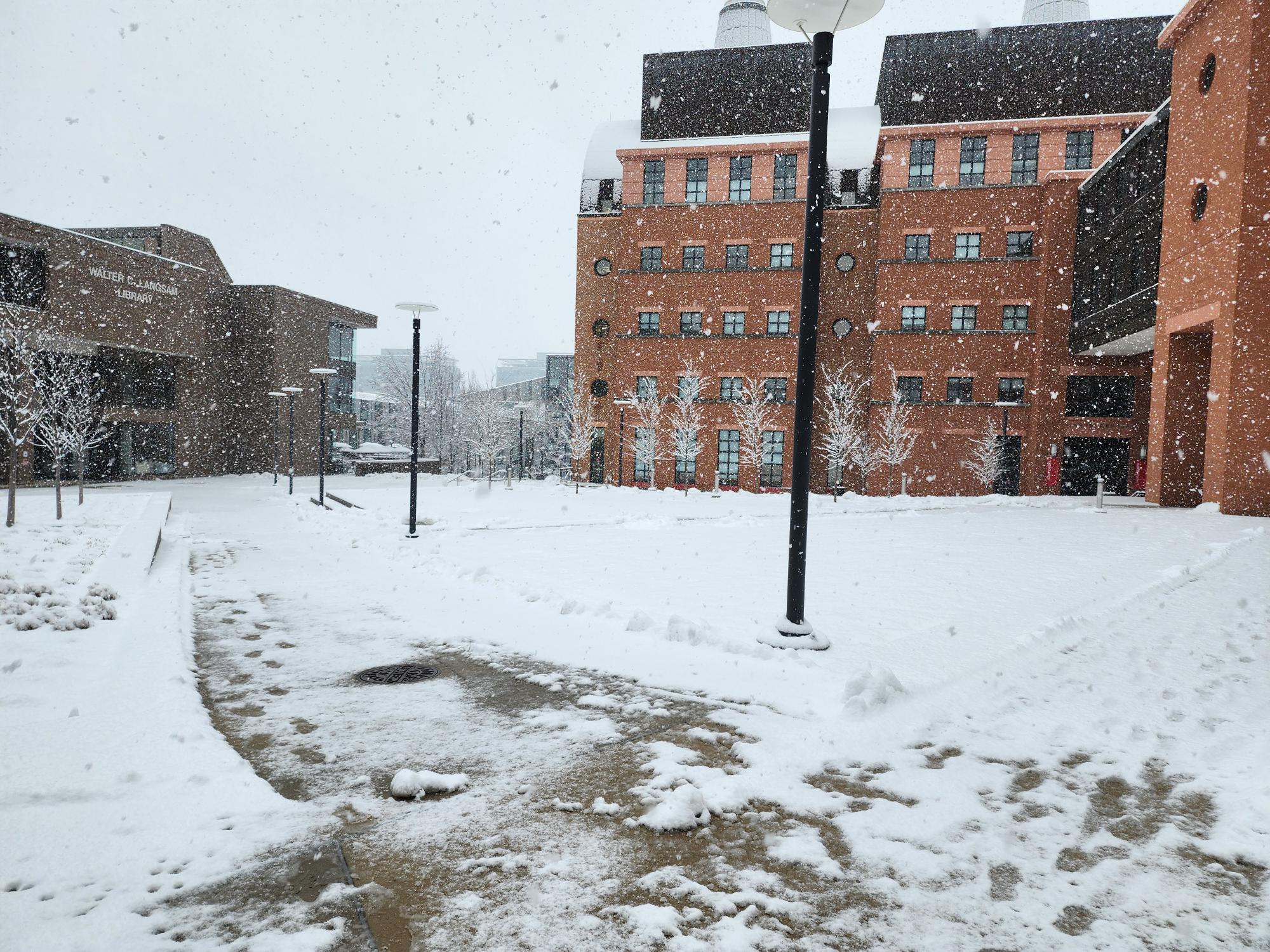
Due to inclement weather, University of Cincinnati campuses are closed from 6 a.m. to 10 a.m. Friday, Dec. 12, 2025. Visit Commencement and Registrar’s pages for additional details. This closure applies to all UC Libraries locations except for the Donald C. Harrison Health Sciences Library, which will be open at 7:45 a.m.

snowy campus

UC Libraries closed December 2, except for HSL

Due to inclement weather, the University of Cincinnati campus will close from 7 a.m. Dec. 2, 2025, until 7 a.m. on Dec. 3, 2025. This closure applies to all UC Libraries locations except for the Donald C. Harrison Health Sciences Library, which will be open Tuesday, Dec. 2 from 7:45 a.m. to 4 p.m.

snowy campus

New online collection features caricatures of notable scientists

When William B. Jensen (1948-2024), the Ralph E. Oesper Professor of the History of Chemistry at the University of Cincinnati from 1986-2024, was a student at the University of Madison-Wisconsin taking the History of Chemistry class, he sketched caricatures of the chemists he was learning about. While Aaron Ihde lectured, Jensen would select a chemist and caricature them based on the portraits found in Ihde’s textbook, “The Development of Modern Chemistry” (1964).

Line drawing caricature of Friedrich Wilhelm Ostwald balancing on a delta G-shaped teeter-totter while the sun rises above the mountaintops behind.
Friedrich Wilhelm Ostwald, Baltic German chemist and philosopher. Caricature by Dr. William Jensen, Courtesy Oesper Collections in the History of Chemistry, University of Cincinnati Libraries.

Now available online via JSTOR, the UC Libraries online collection contains the 33 original, hand-drawn caricatures of notable chemists and physicists Jensen penned between 1970 and 1974. They are held by the Oesper Collections in the History of Chemistry. The collection was scanned and digitized by the UC Libraries Digital Initiatives Team.

Line drawing caricature of Alfred Werner standing in the middle of a giant three-dimensional chemical structure.
Swiss chemist Alfred Werner. Caricature by Dr. William Jensen, Courtesy Oesper Collections in the History of Chemistry, University of Cincinnati Libraries.

Throughout the years, Jensen would submit the caricatures to appear in scientific journals and publications, and reported that there was interest in reproducing them on t-shirts, coffee mugs and even an album cover. Jensen eventually published the caricatures in a 2010 booklet, “Chymists: That strange class of of mortals: Caricatures of famous chemists with a few physicists and biologists,” which was recently published digitally.

Upon Jensen’s death in 2024, the collection was acquired by the Oesper Collection in April 2025.

Line drawing caricature of Albert Einstein wearing a sweater that says "E=mc(2)" on the front
Albert Einstein. Caricature by Dr. William Jensen, Courtesy Oesper Collections in the History of Chemistry, University of Cincinnati Libraries.

The Oesper Collections in the History of Chemistry is a nationally recognized collection of scientific artifacts, books, journals, photos and prints related to the history of chemistry. They are a joint venture of the University of Cincinnati Libraries and the UC Department of Chemistry. They were founded in 1986 by William B. Jensen.

Read Source, the online newsletter, to learn about the news, events, people and happenings in UC Libraries.

source

Read Source, the online newsletter, to learn about the news, events, people and happenings in UC Libraries.

In this issue of Source, Liz Kiscaden, dean and university librarian, welcomes Bearcats to campus and we highlight what we did over the summer. We announce a new digital collection, The Daniel S. Young Archives of Medical Illustrations, as well as a collaboration to digitize rare manuscripts. We invite readers to the upcoming Cecil Striker Annual Lecture, “Pharmacy Education in the Queen City,” and to learn more about other Library Events. Chris Platts, assistant professor of art history and frequent collaborator with the Libraries, talks about some of his projects and research interests. And Katie Foran-Mulcahy writes about efforts to re-make the MakerLab in the CECH Library.

Read these articles, as well as past issues, on the website. To receive Source via e-mail, contact melissa.norris@uc.edu to be added to the mailing list.

2025 Systematic Review Workshop Series 

The University of Cincinnati Libraries is launching a new series of workshops focused on systematic reviews where researchers can work through the review process with the support of our experienced librarians.  

Systematic reviews are large projects that are rigorous, multi-faceted, and lengthy undertakings. We have designed these workshops to be accessed as a series or independently so that researchers can tailor their learning to their current progress from research question to publication. 

If you are interested in conducting a systematic review or other type of comprehensive review, join us for one or more of the workshops by registering on Faculty OneStop

Undergraduate Research Summer Learning Community has started

Summer is here and that means the Undergraduate Research Summer Learning Community (URSLC)has begun.  The kick-off session, held June 4th on the 4th Floor of Langsam brought together students from 55 different research areas for networking and community.  The students discussed their research interests and upcoming opportunities over wonderful food featuring egg bake, potatoes, and homemade pastries provided by local business and award winning Pierre Entities Catering

The 4th floor area of Langsam with many students sitting at the tables

After an overview of the program, Graduate Students and Presidential Fellows Adair McWilliams (Epidemiology), Damilola Odula (Philosophy), and Henry Levesque (Regional and Urban Planning) provided insight into their early days of research and how they thrive in the research environment.  Research results in new knowledge, innovations and improved lives and requires a love of exploring the unknown, perseverance, passion, and embracing both failure and success.  The graduate students encouraged the audience to dive into the passion, make time for processing information, and especially to make sure they also take care of themselves through the research experience. 

The community meets Wednesdays in June and July from 9:30 to 11 am both in-person and via zoom. The upcoming sessions will cover mentorship, data management, ethics, ownership, presentations and research methods.  If you are interested to participate, you can still register.  More information can be found on the UC Libraries website.

Image of Don Wittrock presenting to students with the triceracopter in the background

The URSLC is sponsored by UC Libraries and in collaboration with the TRIO McNair Scholars, University Honors Discover program, NSF Louis Stokes Alliances for Minority Participation, and CCPS Undergraduate Research Program. The program is free and open to any undergraduate interested in research.

head shots of six people who are the facilitators of the program

Welcome Debao Chen, GIS research consultant for Research and Data Services

UC Libraries welcomes Debal Chen, PhD student in Geography & GIS as our new GIS research consultant.

Debao is a PhD candidate in Geography at the University of Cincinnati. Originally from Hunan province, China, he earned his master’s degree in Human Geography from Guangzhou University. His research focuses on crime geography and spatial analysis of crime, with particular interests in the dynamics between gentrification, Google Street View imagery, and the life cycles of urban retail stores.

Also, Debao has published in several peer-reviewed journals, including Computers, Environment and Urban Systems, Applied Geography, and Humanities and Social Sciences Communications. As a GIS Collab consultant, he looks forward to supporting others while continuing to expand his analytical toolkit in GIS-related analysis.

Check out his ORCID and Google Scholar profiles

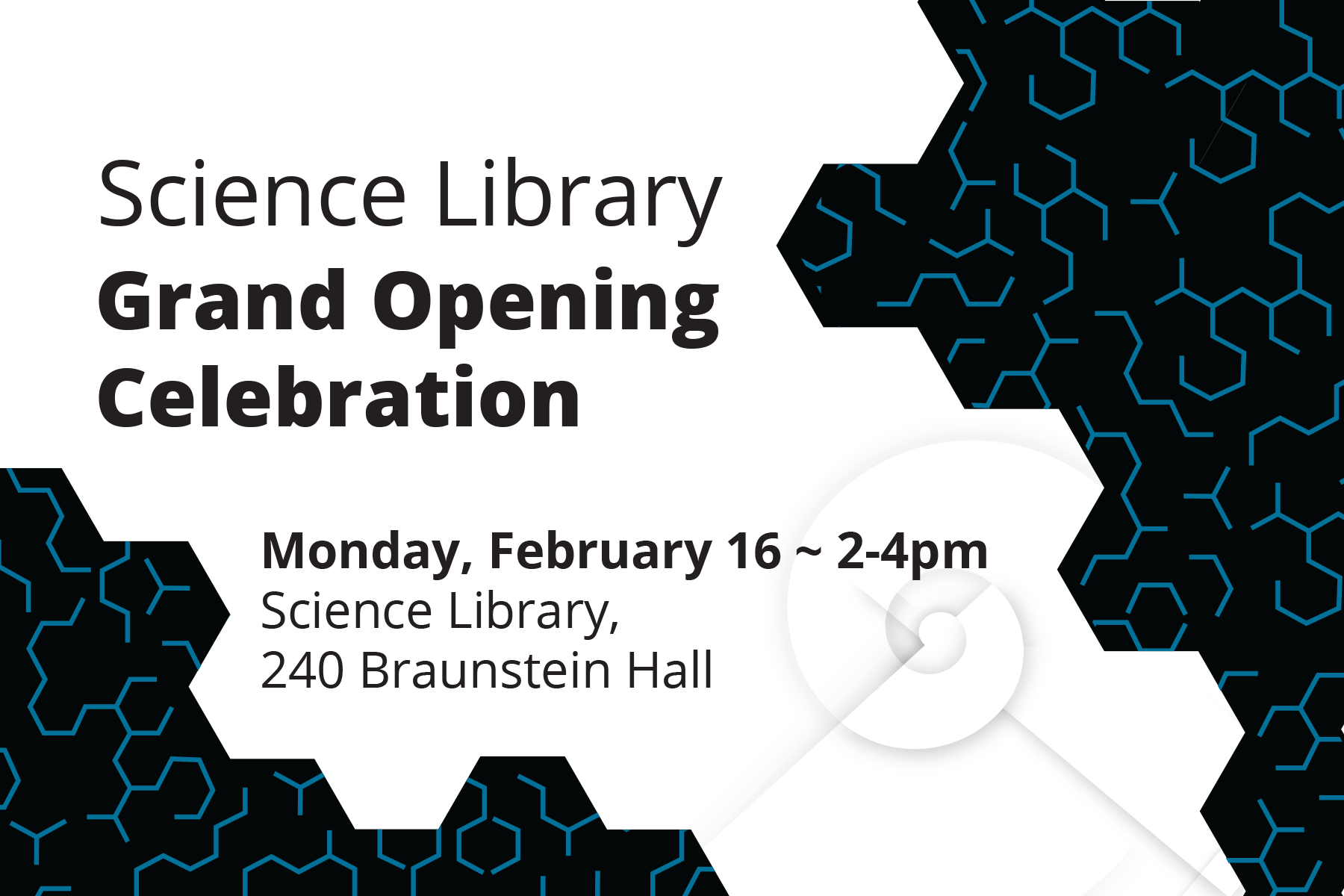
The Data & GIS collab is now located in 460 Langsam due to renovations in the new Science Library.

Debao’s hours will be

  • Tuesday 11 am – 4 pm
  • Wednesday 11 am – 4 pm
  • Thursday 11 am – 4 pm

Read Source, the online newsletter, to learn about the news, events, people and happenings in UC Libraries.

source

Read Source, the online newsletter, to learn about the news, events, people and happenings in UC Libraries.

In this issue of Source, Liz Kiscaden, dean and university librarian, writes about how UC Libraries is taking advantage of funding opportunities to Invest in Strategic Priorities. The Archives and Rare Books Library announces receipt of a national grant to process historic Cincinnati schools desegregation case records.The Carl Solway Gallery Archive in the Robert A. Deshon and Karl J. Schlachter Library for Design, Architecture, Art and Planning (DAAP) Library is featured. Ted Baldwin, head of the Sciences Libraries, writes about how the razing of the iconic Crosley Tower will necessitate the move of the current Chemistry-Biology Library space to Braunstein Hall where it will merge with the Geology-Mathematics-Physics Library to become the Science Library opening fall semester.

Beginning in 2025, the Preservation Lab expanded its mission to provide expertise and services to the larger cultural heritage community, moving to a regional lab model. Under this new model, the Preservation Lab is now entirely managed, staffed and equipped by the University of Cincinnati. Two articles: Re-introducing the Preservation Lab and Exploring Historical Bindings: A Hands-On Workshop at UC’s Archives and Rare Books Library celebrate the Preservation Lab. Open Access publishing opportunities are discussed in this issue and upcoming Library Events are listed.

Read these articles, as well as past issues, on the website. To receive Source via e-mail, contact melissa.norris@uc.edu to be added to the mailing list.