The University of Cincinnati Libraries Archives and Rare Books Library has completed processing the papers of University of Cincinnati professor emeritus Dr. Kenneth E. Caster.
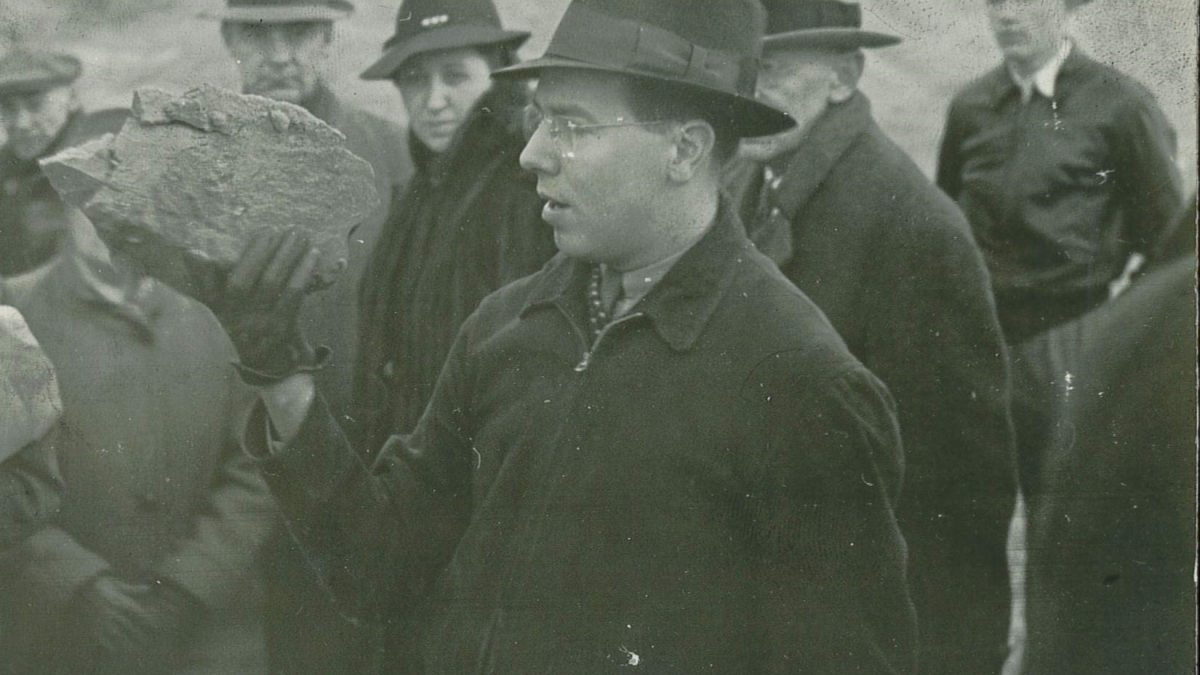

The University of Cincinnati Libraries Archives and Rare Books Library has completed processing the papers of University of Cincinnati professor emeritus Dr. Kenneth E. Caster.
The Archives and Rare Books Library is excited to announce that the Robert F. Laufman papers have been processed, and a finding aid has been created.
Continue reading
Read Source, the online newsletter, to learn about the news, events, people and happenings in UC Libraries.
In this issue of Source, Liz Kiscaden, dean and university librarian, writes about a new global library collaboration with the library at the University of Cape Coast in Ghana. We announce the opening of two renovated library spaces: the Science Library and the CECH Library Reading Room as we bid a fond farewell to Crosley Tower. We highlight library services in the CECH Library to improve accessibility and our expanding Evidence Synthesis group. Library collections are on display in the Chem Bio building renovation featuring the Oesper Collection and online in a new exhibit by the Archives and Rare Books Library about the Bronson v. the Cincinnati Board of Education. Spring is events season in UC Libraries, and we feature those currently on the calendar.
Read these articles, as well as past issues, on the website. To receive Source via e-mail, contact melissa.norris@uc.edu to be added to the mailing list.
The Archives and Rare Books library is excited to announce that the John Day Caldwell papers (UA-81-22) have been processed, and a finding aid has been completed. The collection contains a wealth of documents dating from 1782 to 1902 that provide a detailed look into the settlement and early history of Cincinnati, as well as Ohio state history.
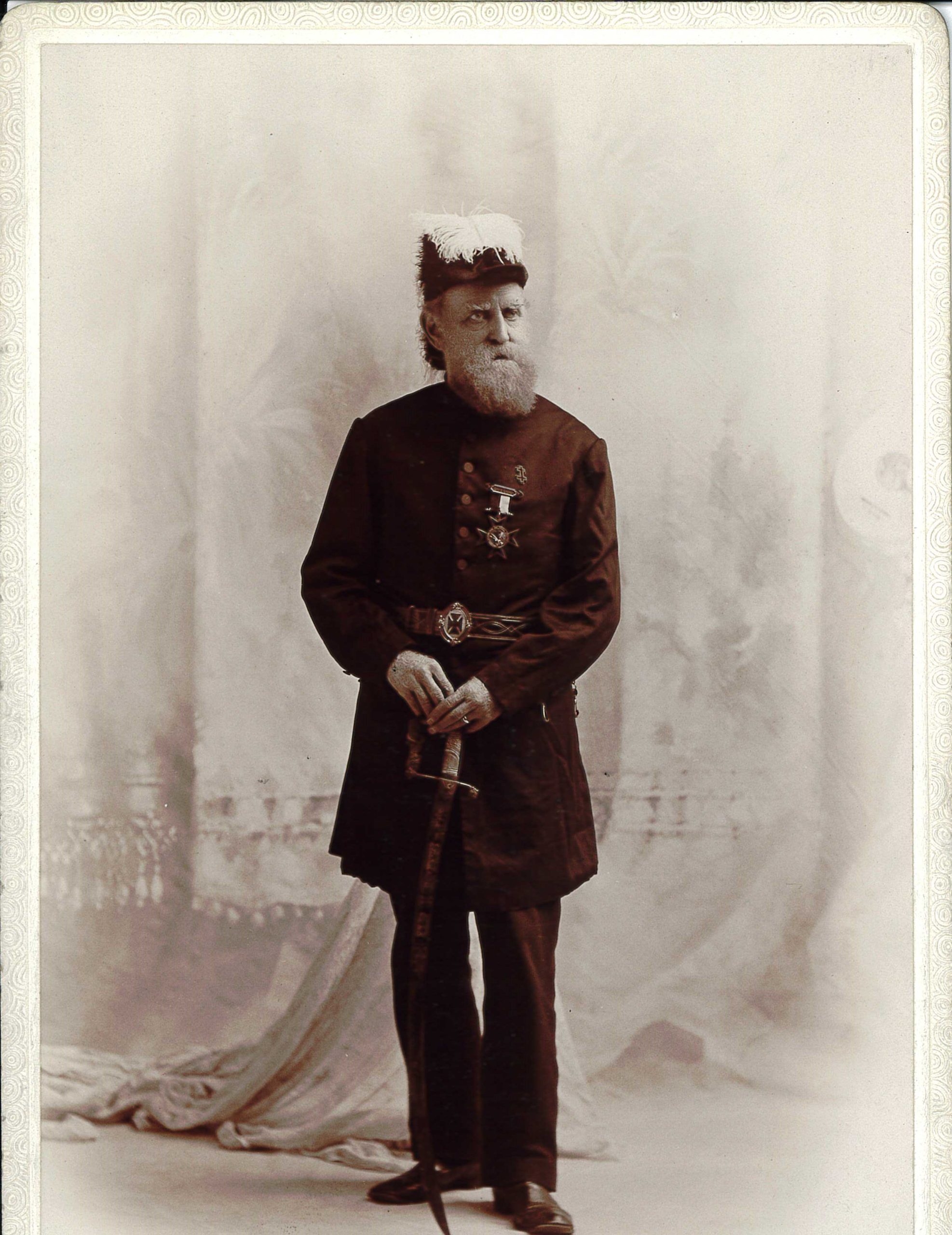
John Day Caldwell (1816-1902) worked in numerous roles in Cincinnati, including as a transportation agent, newspaper editor, librarian, city commissioner and Cincinnati Board of Education clerk. During the Civil War, Caldwell assisted in establishing the Cincinnati Home Guards, a civilian group of men who protected and patrolled the city.
His papers, originally stored in metal bread tins by Caldwell, were received as part of the Ohio Mechanics Institute records back in the 1970s. A card catalog was created for the collection, and the papers were rehoused into archival boxes following their receipt. However, archivists at ARB have reprocessed the collection for better organization and have created a corresponding finding aid that can be accessed online.
Continue readingOn a cold, snowy Friday at the end of the semester,The Preservation Lab hosted a 3D imaging workshop where two professors from UC’s College of Design, Architecture, Art & Planning (DAAP) taught 3D imaging techniques to a small group of imaging colleagues from Ohio and Michigan labs.
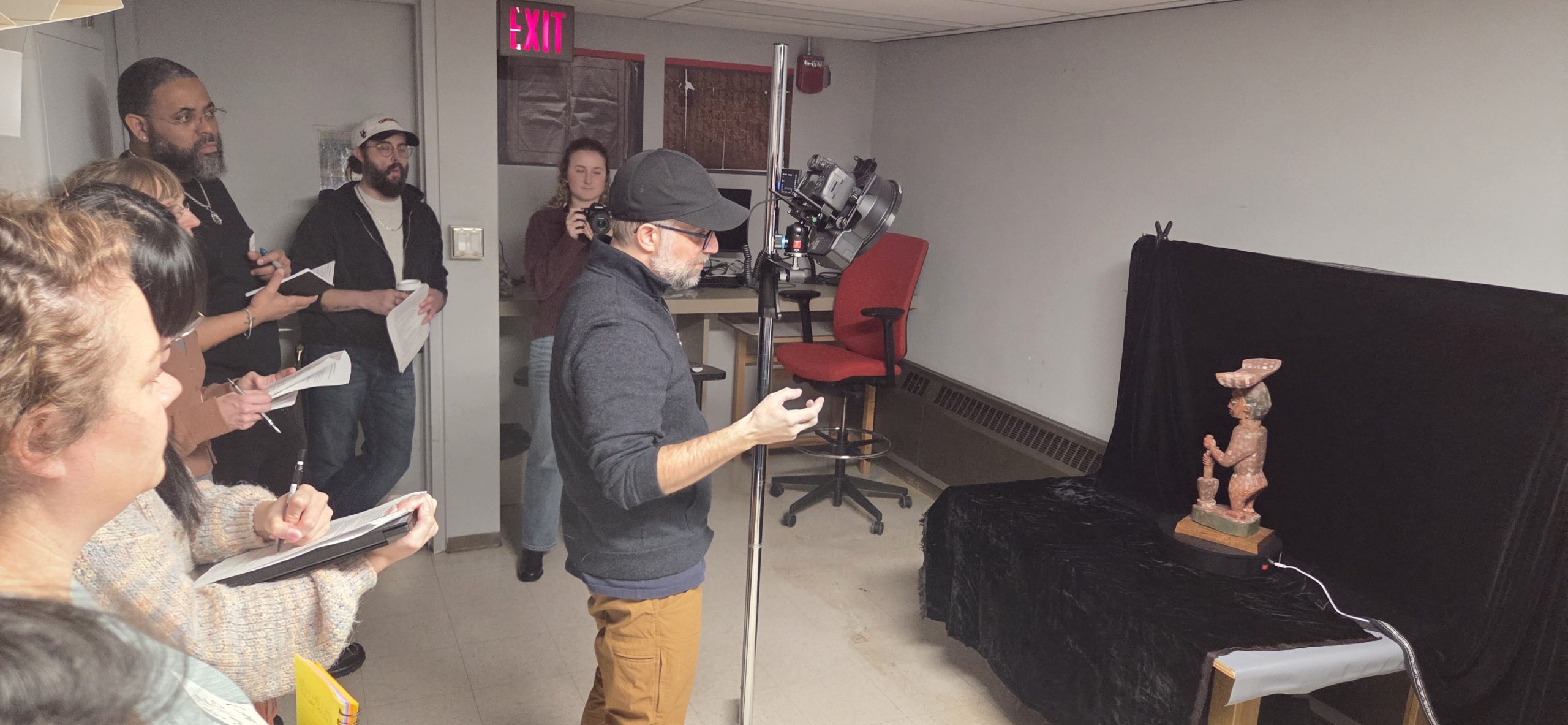
The instructors, Jordan Tate and John-David Richardson, both teach photography in DAAP. Previously, Jordan cross-collaborated with Jessica Ebert from the Preservation Lab on imaging the Assyrian Cornerstone, found in the collection of the Archives and Rare Books Library. Jordan demonstrated 3D imaging techniques and Jessica demonstrated how to do Reflectance Transformation Imaging (RTI).
Participants in the Friday, Dec.12th workshop were:
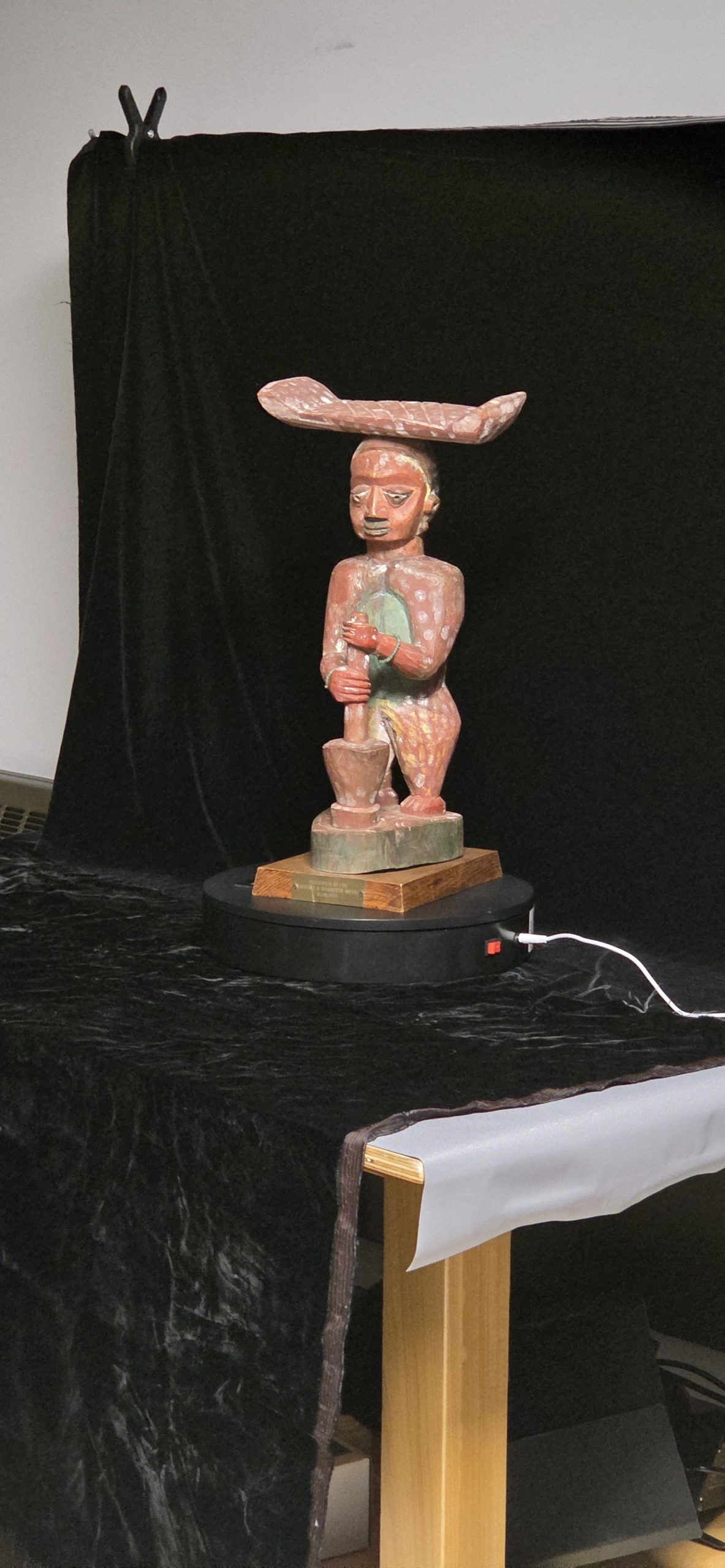
The object photographed came from the Henry R. Winkler Center for the History of the Health Professions.
The Yoruba, Luba or Luluwa/Lulua Statue (circa 1800—1900) was presented by “the Interns & Residents Wives Club, 1974” to the University of Cincinnati Hospital. The statue’s distinct shapes and facial features match most closely to the sculpture style of the Yoruba, Luba or Luluwa/Lulua. The figure appears to be working with a mortar and pestle, and was made for sale, rather than ceremonial or cultural use.
The Preservation Lab provides the full suite of preservation services to the University of Cincinnati Libraries. The Lab’s expertise is in book and paper conservation, with services available in general circulating materials repair, single-item conservation treatment, housing, exhibition prep and preservation consulting.
The use of 3D imaging in preservation is crucial as it creates an accurate visual record of an object before and after treatment. It allows conservators to examine often fragile objects in close detail without touching, and possibly damaging, the structure. In addition, 3D imaging provides a visual record for students and researchers to view and study.
Written by Julianna Witt and Catherine Cubera
The Archives and Rare Books Library is excited to announce a new ARB digital exhibition that has been completed and is now accessible online. This digital exhibition was a part of the National Association for the Advancement of Colored People project to process and create a finding aid for the NAACP Bronson v. Board of Education of the City of Cincinnati records through the National Historical Publications & Records Commission grant we received in November 2024.
Continue readingWhen William B. Jensen (1948-2024), the Ralph E. Oesper Professor of the History of Chemistry at the University of Cincinnati from 1986-2024, was a student at the University of Madison-Wisconsin taking the History of Chemistry class, he sketched caricatures of the chemists he was learning about. While Aaron Ihde lectured, Jensen would select a chemist and caricature them based on the portraits found in Ihde’s textbook, “The Development of Modern Chemistry” (1964).
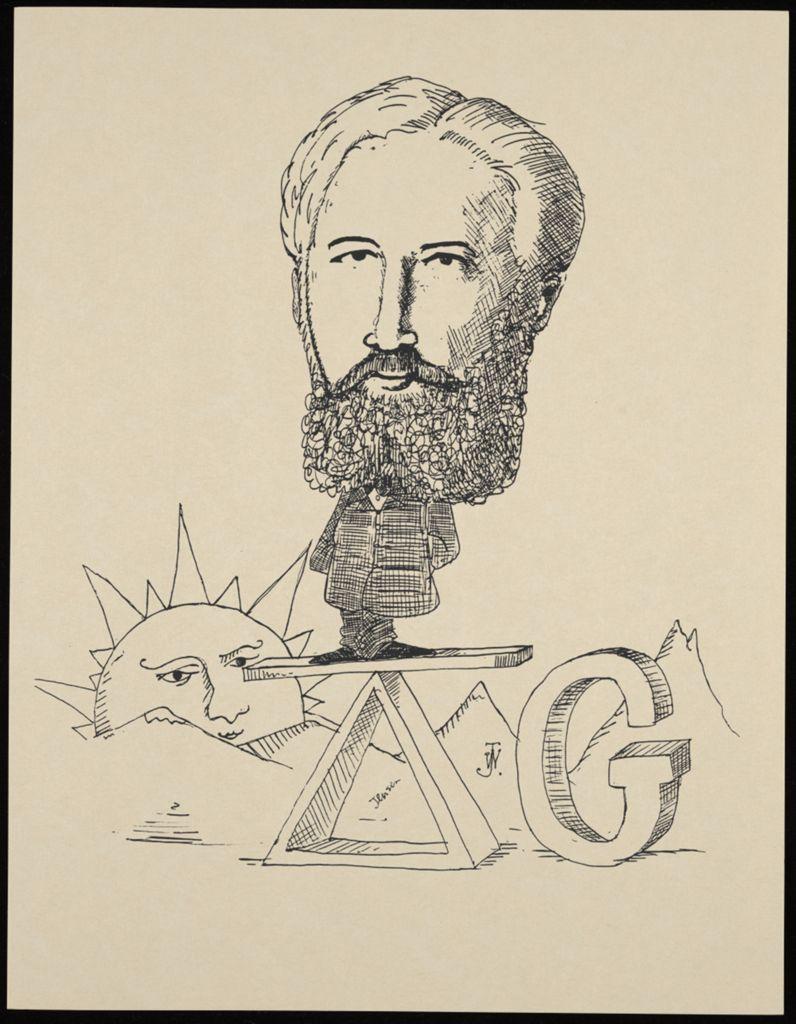
Now available online via JSTOR, the UC Libraries online collection contains the 33 original, hand-drawn caricatures of notable chemists and physicists Jensen penned between 1970 and 1974. They are held by the Oesper Collections in the History of Chemistry. The collection was scanned and digitized by the UC Libraries Digital Initiatives Team.
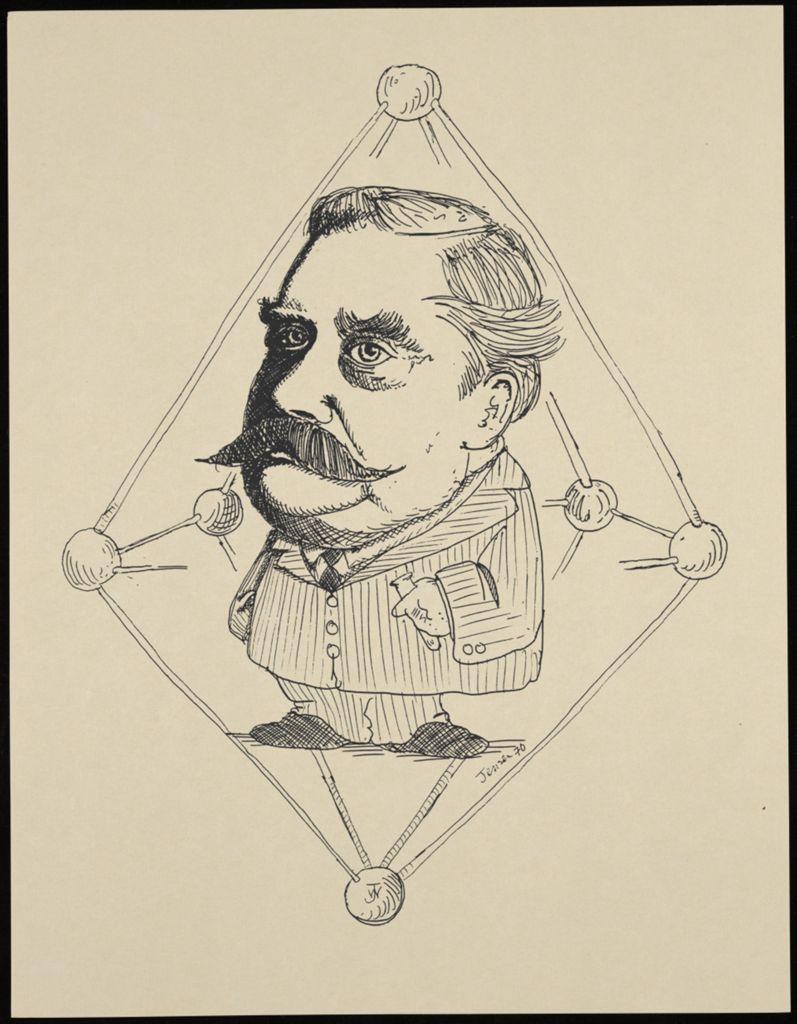
Throughout the years, Jensen would submit the caricatures to appear in scientific journals and publications, and reported that there was interest in reproducing them on t-shirts, coffee mugs and even an album cover. Jensen eventually published the caricatures in a 2010 booklet, “Chymists: That strange class of of mortals: Caricatures of famous chemists with a few physicists and biologists,” which was recently published digitally.
Upon Jensen’s death in 2024, the collection was acquired by the Oesper Collection in April 2025.
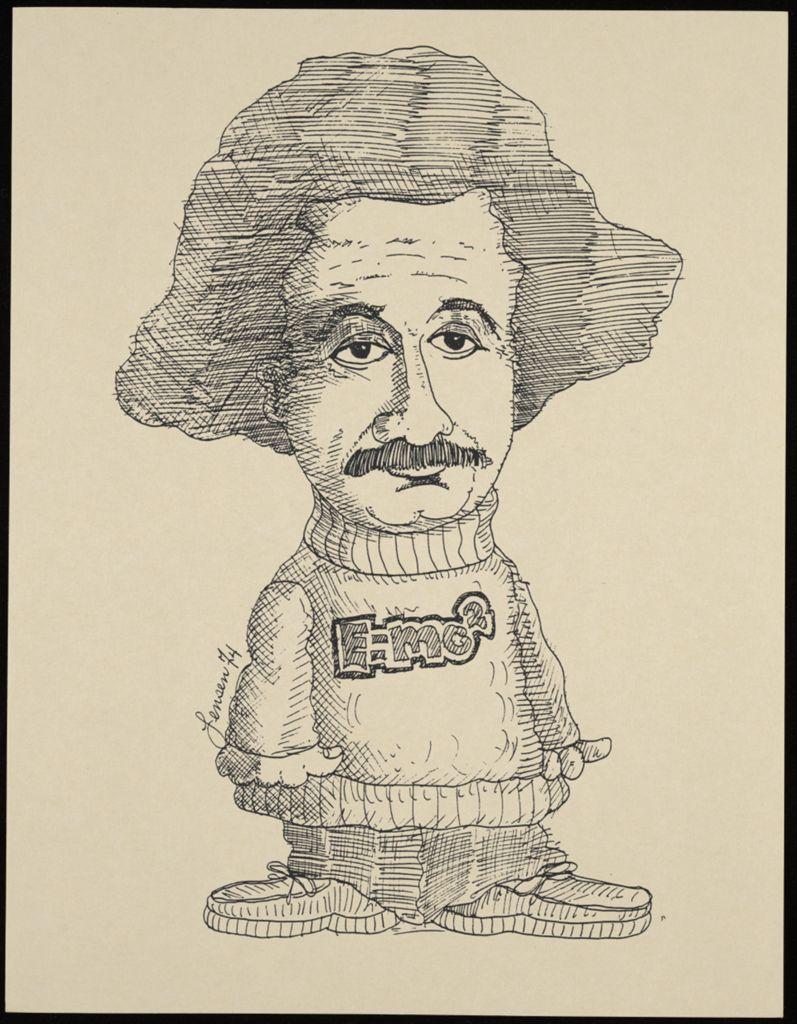
The Oesper Collections in the History of Chemistry is a nationally recognized collection of scientific artifacts, books, journals, photos and prints related to the history of chemistry. They are a joint venture of the University of Cincinnati Libraries and the UC Department of Chemistry. They were founded in 1986 by William B. Jensen.
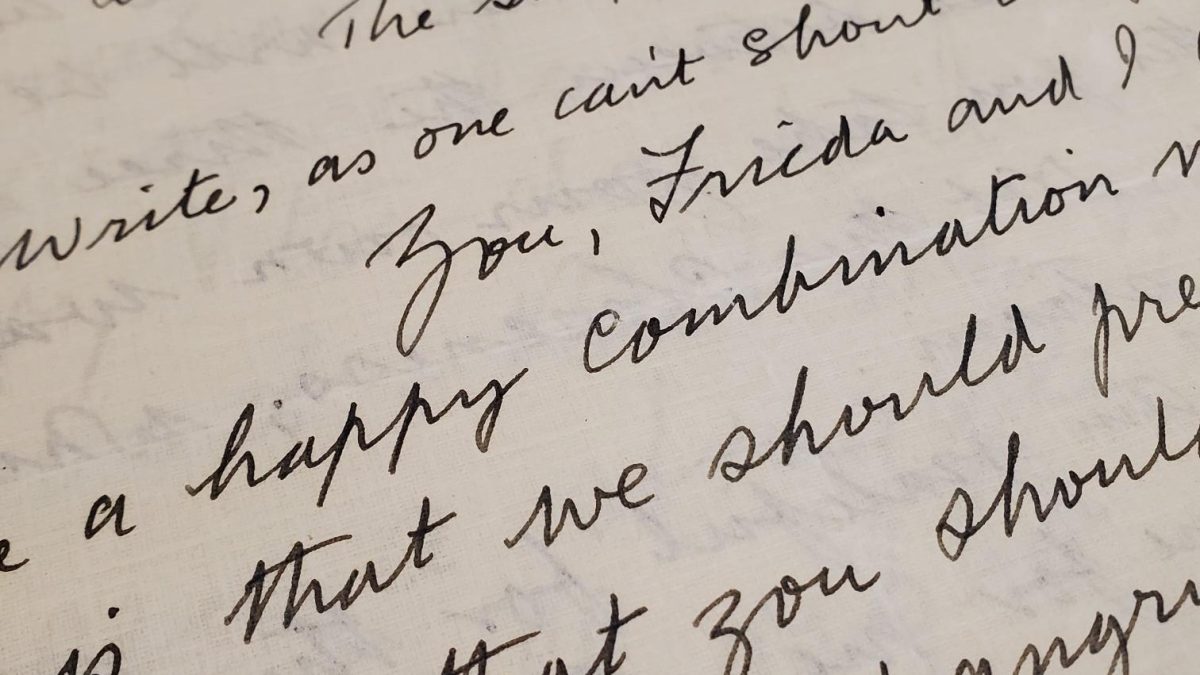
“You, Freida and I don’t make a happy combination now. The best is that we should prepare to separate: that you should go your own way. I am not angry; except that I hate ‘situations’ and feel humiliated by them…I am grateful for the things you have done for me. But we must stand apart.”
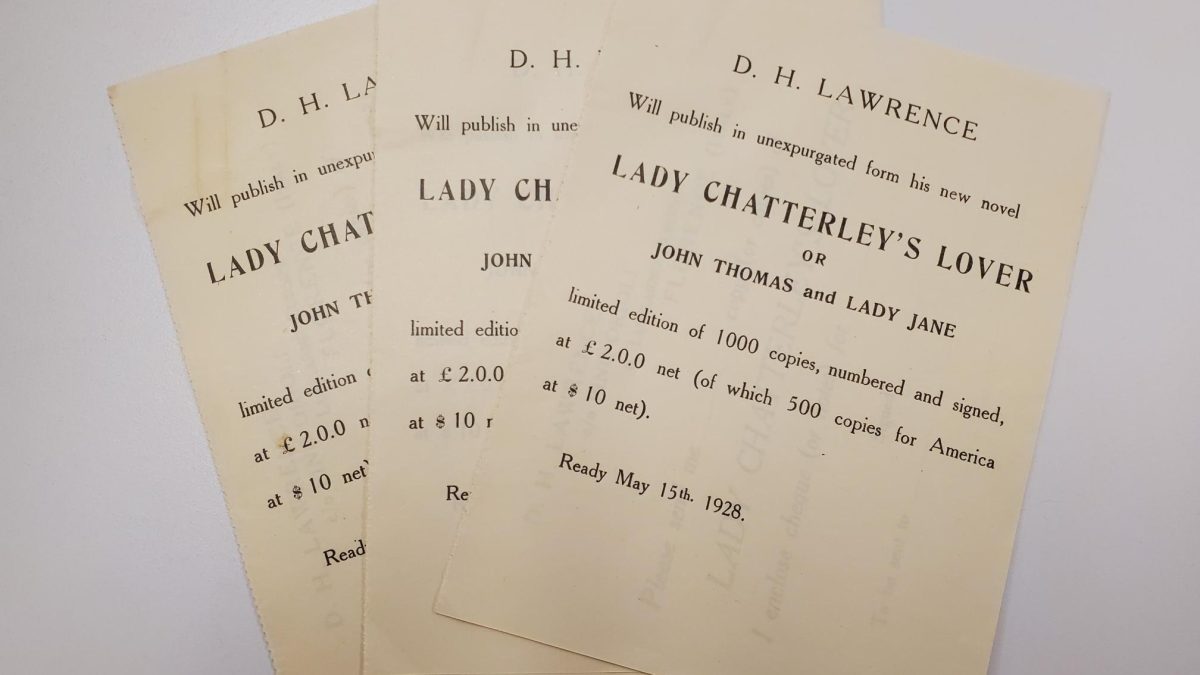
In a letter dated January 1925 and sent from English novelist and short story writer D.H. Lawrence while in Oaxaca, Mexico, to Dorothy Brett, who was living on his ranch in Taos, New Mexico, Lawrence let his feelings be known about the sometimes tense relationship he and his wife, Frieda, shared with Brett. The multiple letters that comprise the Dorothy Brett papers, housed at the Archives and Rare Books Library (ARB), provide an insight not only into Brett’s relationship with the Lawrences, but with other literary and art figures during the early twentieth century. Newly organized with an online finding aid, the Brett papers provide a wealth of information about Brett and her social circles.
British by birth and raised near Windsor, Dorothy Brett’s father was influential in the affairs of England and the royal family. After attending the Slade School of Art, Brett began her career as an artist. In 1924, she accepted an invitation by D.H. Lawrence to move to the United States to join the artistic and bohemian community that had formed there. She remained in the United States for the remainder of her life and eventually became a U.S. citizen.
Her papers consist of approximately 200 letters, dating from 1916-1948, from several major early twentieth century literary figures including D.H. Lawrence, Frieda Lawrence, John Middleton Murray, J.M. Barrie, Muriel Draper, A.R. Orage, Sigried Sassoon, and Virginia Woolf. Additional correspondents include artist Augustus John and economist John Maynard Keynes.
The bulk of the letters are written by D.H. and Frieda Lawrence between 1924 and 1930. The Lawrence letters provide insight into the sometimes inviting and sometime contentious relationship between Brett and the Lawrences. Topics include the Lawrences’ travels to Europe and Mexico and in the United States; D.H. Lawrence’s illnesses; his writing and publishing activities; an exhibition of D.H. Lawrence’s photographs; the Lawrences’ ranch in New Mexico; and the disposition of his manuscripts.
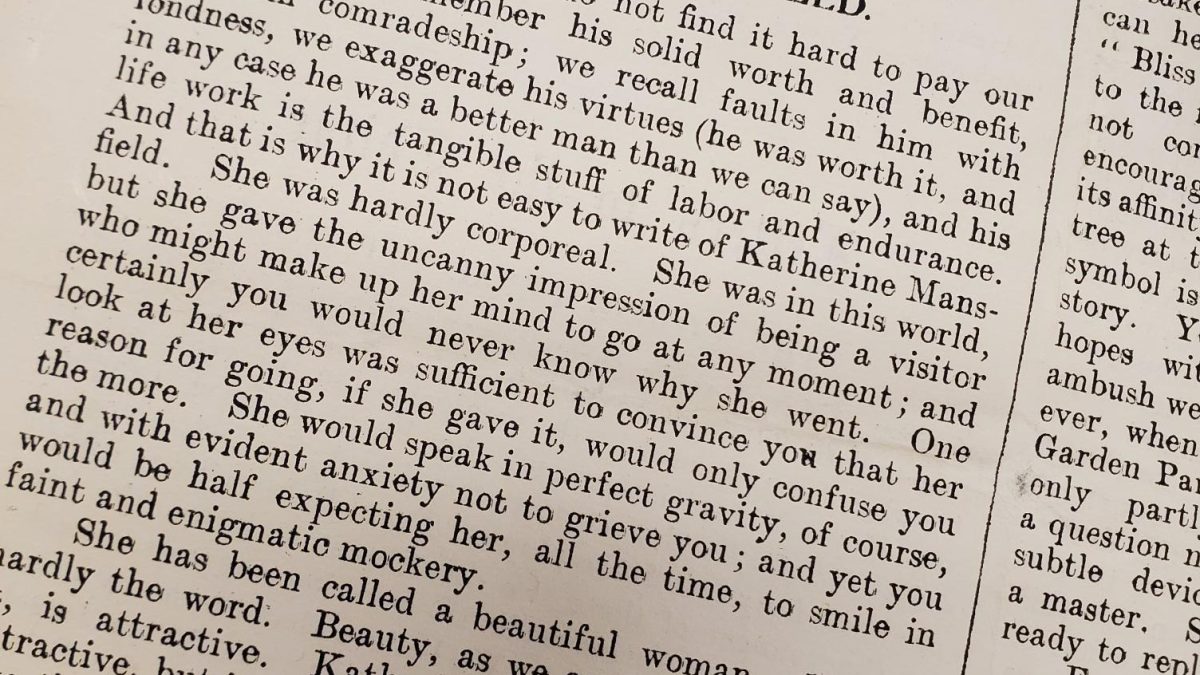
The letters from John Middleton Murray, a friend of Brett and husband of writer Katherine Mansfield, form the second largest group of letters. They concern Murray’s relationship with Brett prior to and after his marriage, his support of her work as an artist, Katherine Mansfield’s writing and health, and Murray’s own writing and editing of Mansfield’s letters, as well as his thoughts on D.H. and Frieda Lawrence.
The letters from other correspondents, while not as extensive or expressive, provide a view toward Brett’s social and artistic relations. Others mentioned in passing throughout the letters in this collection include Nancy Cunard, Aldous Huxley, S.S. Koteliansky, Lady Ottoline Morrell, Vita Sackville-West, and Carl Van Vechten, making the Dorothy Brett Papers a valuable collection for any student or researcher interested in British literature during the early decades of the twentieth century. The collection complements a small number of D.H. Lawrence manuscripts and additional sets of correspondence he exchanged with others, which are also housed at ARB. Those interested in consulting the collection can schedule a research appointment at ARB by emailing archives@ucmail.uc.edu.
Are you the family historian? Do you like to look at old photographs? Like solving puzzles and bringing a little order to unorganized things? Then a career in archives may be just what you are looking for!
The Archives and Rare Books Library would like to cordially invite all UC students to attend our Archives Career Panel in celebration of American Archives Month this October.
This moderated, hour-long talk will feature conversation between archivists from UC Libraries, as well as local Cincinnati archivists, as they discuss their career paths, reflect on the current and future state of the profession, and answer audience questions in a Q&A.
The event will be held on Monday, October 6th from 1:30-2:30pm in Room 471 of Langsam Library.
Please direct any questions about the event to Catherine Cubera at cuberace@ucmail.uc.edu or Christopher Harter at hartercr@ucmail.uc.edu.
We hope to see you there!
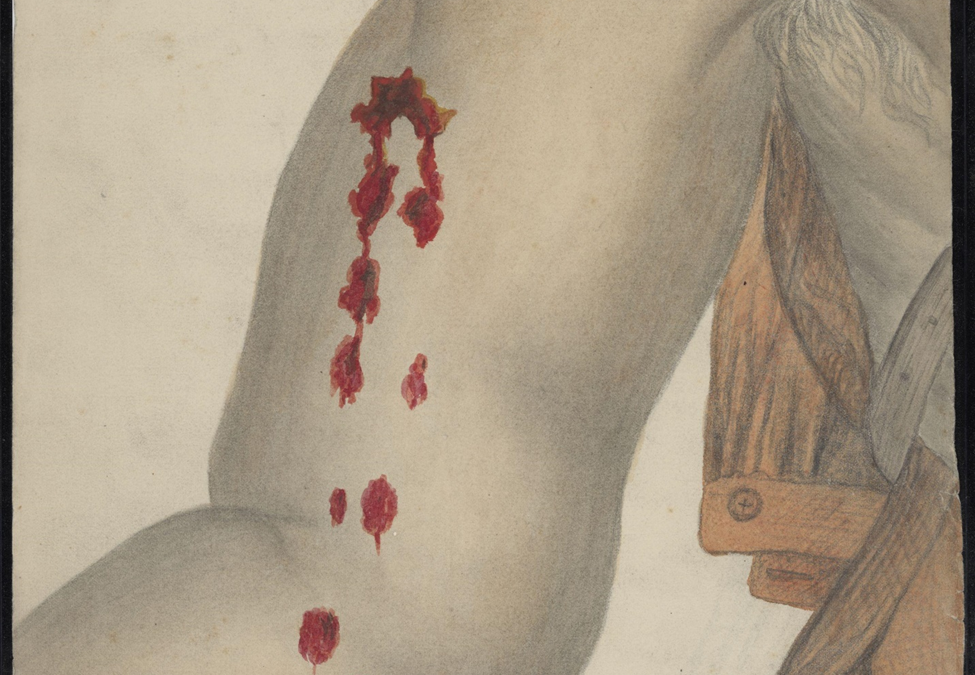
Medical illustrations and drawings are a reflection of the state of medical practice at a specific moment in time providing a visual record of science, technology, and anatomical knowledge.
The artwork of Daniel S. Young highlights the artistic and medical contributions of an American Civil War era medical illustrator in a military context. Daniel S. Young: American Civil War Medical Illustrations on JSTOR. His artistry paints a portrayal of how medical illustration informed medical professionals during the 19th century. Young’s Civil War medical illustrations were crucial in educating doctors on surgical procedures and about previously unseen wounds. While medical illustrations such as Dr. Daniel Young’s served to educate doctors they were also important in aiding veterans in their pension claims and showing how the war impacted the soldiers’ health.